 Post by
 Texas is in the middle of one of the biggest data center construction booms the state has ever seen. Behind every one of those builds is a long list of heavy equipment that has to arrive, get positioned, and get installed — often on a schedule where a single delay ripples across every other trade on site. Generators, chillers, switchgear, and CRAC units don’t just get dropped into place. Installing them on an active construction site is its own discipline, and getting it wrong is expensive.
Here’s what actually goes into installing heavy equipment on a live data center build, and why it takes a specialized team to do it right.
It Starts Before the Equipment Ever Arrives
Industrial equipment installation on a data center site begins weeks before a piece of equipment shows up on a truck. That planning phase includes confirming delivery windows, mapping the route equipment will travel once it’s on site, checking rigging points and floor load limits, and coordinating with the general contractor on exactly where the piece needs to sit relative to every other trade working nearby.
Skipping this step is how equipment ends up staged in the wrong spot, blocking access for other crews, or waiting on-site for weeks with nowhere secure to go.
Sequencing Around Other Trades
A data center build has electrical, mechanical, structural, and IT infrastructure teams all working in overlapping windows. Installing a generator or switchgear isn’t an isolated task — it has to be sequenced so it doesn’t block electrical rough-in, doesn’t interfere with concrete work still curing nearby, and lines up with the crane or rigging equipment’s availability on site.
Getting this sequencing wrong is one of the most common causes of schedule slippage on large industrial builds. A team with data center experience knows how to build that sequencing into the plan from day one, not adjust for it after something’s already in the way.
The Precision Behind the Lift
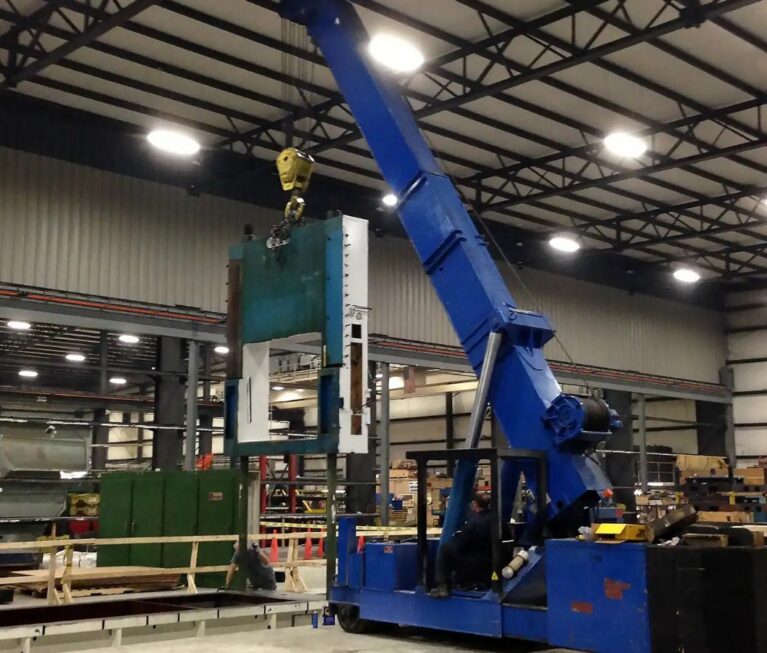
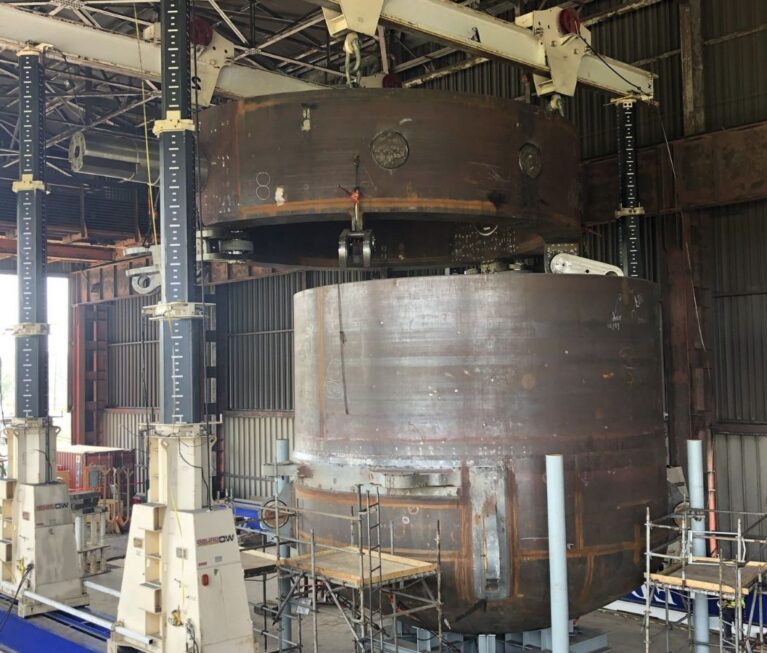
Heavy equipment installation isn’t just about getting something from the truck to the pad. Generators, chillers, and switchgear often have tight tolerances for placement — sometimes within fractions of an inch — to properly align with piping, conduit, and structural anchor points already in place. That level of precision requires the right lifting equipment, an experienced crew, and a clear plan before the load ever leaves the ground.
This is where rigging and millwright work come together: the rigging team handles the safe lift and positioning, while precision alignment ensures the equipment is set correctly the first time.
Staging and Storage When Timelines Shift
Data center schedules move. Equipment sometimes arrives before its installation slot is ready, or a delay elsewhere on site pushes an install back by weeks. When that happens, secure on-site or off-site storage keeps expensive equipment protected and out of the way until the site is ready for it — without holding up the delivery schedule or forcing a rush later.
Why This Requires 24/7 Readiness
Large data center projects don’t run on a strict 9-to-5 schedule, and neither does the equipment installation supporting them. Night pours, off-hours deliveries, and compressed windows to avoid conflicting with other trades are common. A team that can mobilize outside standard business hours — and respond quickly if something needs to move unexpectedly — is what keeps these projects from losing days to scheduling conflicts.
What to Look for in an Installation Partner
For general contractors managing data center builds, the right rigging and installation partner should bring:
- Direct experience with generators, chillers, switchgear, and CRAC unit installation
- The ability to sequence work around other active trades on site
- In-house rigging and millwright capabilities, so the lift and the precision alignment happen under one team
- Secure storage options for equipment awaiting its installation window
- 24/7 mobilization for off-hours and time-sensitive work
Valor Specialized Rigging has installed heavy equipment on data center construction projects across San Antonio, Austin, Houston, and Florida, working directly with general contractors to keep equipment installation on schedule. Contact our team to talk through your project’s timeline.
Frequently Asked Questions
What kind of equipment is typically installed on a data center build?
Generators, chillers, switchgear, CRAC units, transformers, and other mission-critical mechanical and electrical equipment are among the most common pieces installed during data center construction.
How far in advance should equipment installation be planned on a data center project?
Planning typically starts weeks before equipment arrives, covering delivery scheduling, site routing, floor load checks, and coordination with other trades already working in the area.
Why does equipment installation need to be sequenced with other trades?
Data center builds have electrical, mechanical, and structural teams working in overlapping windows. Installing equipment out of sequence can block other trades, cause rework, or delay the overall schedule.
What’s the difference between rigging and installation on a job like this?
Rigging covers the safe lift and positioning of the equipment. Installation includes the precision alignment and mechanical work required to set it correctly and get it ready to operate. Both typically happen together on data center projects.
Can equipment be stored on-site if it arrives before it’s ready to install?
Yes. Secure on-site or off-site storage is common on data center builds when equipment arrives ahead of its installation window or when schedules shift.
Does data center equipment installation happen outside normal business hours?
Often, yes. Night work, off-hours deliveries, and compressed installation windows are common on active data center construction sites, which is why 24/7 mobilization matters.
What happens if equipment installation gets delayed on a data center project?
A delay in one piece of equipment installation can ripple across other trades relying on that milestone. Experienced teams plan contingencies and communicate proactively with the general contractor to minimize downstream impact.
How precise does equipment placement need to be?
For equipment like generators and switchgear, placement often needs to align within fractions of an inch to properly connect with existing piping, conduit, and structural anchor points.
Who coordinates equipment installation with the general contractor on a data center build?
The rigging and installation team typically works directly with the general contractor’s project management team to align delivery, staging, and installation with the overall construction schedule.
Does Valor Specialized Rigging have experience with data center construction?
Yes. Valor has installed heavy equipment, including generators and mechanical systems, on data center construction projects across Texas, working directly within active construction schedules.
What areas does Valor Specialized Rigging serve for data center projects?
Valor serves San Antonio, Austin, Houston, and Florida, with additional data center and industrial projects taken on across Texas and beyond depending on scope.